
Summary
You need planning permission because building work does not just affect you. It affects neighbours, streets, infrastructure and the long-term shape of places. Planning permission exists to manage impact and fairness, not to block development. It is a judgement-based system designed to balance what you want to do with what is reasonable for everyone else.
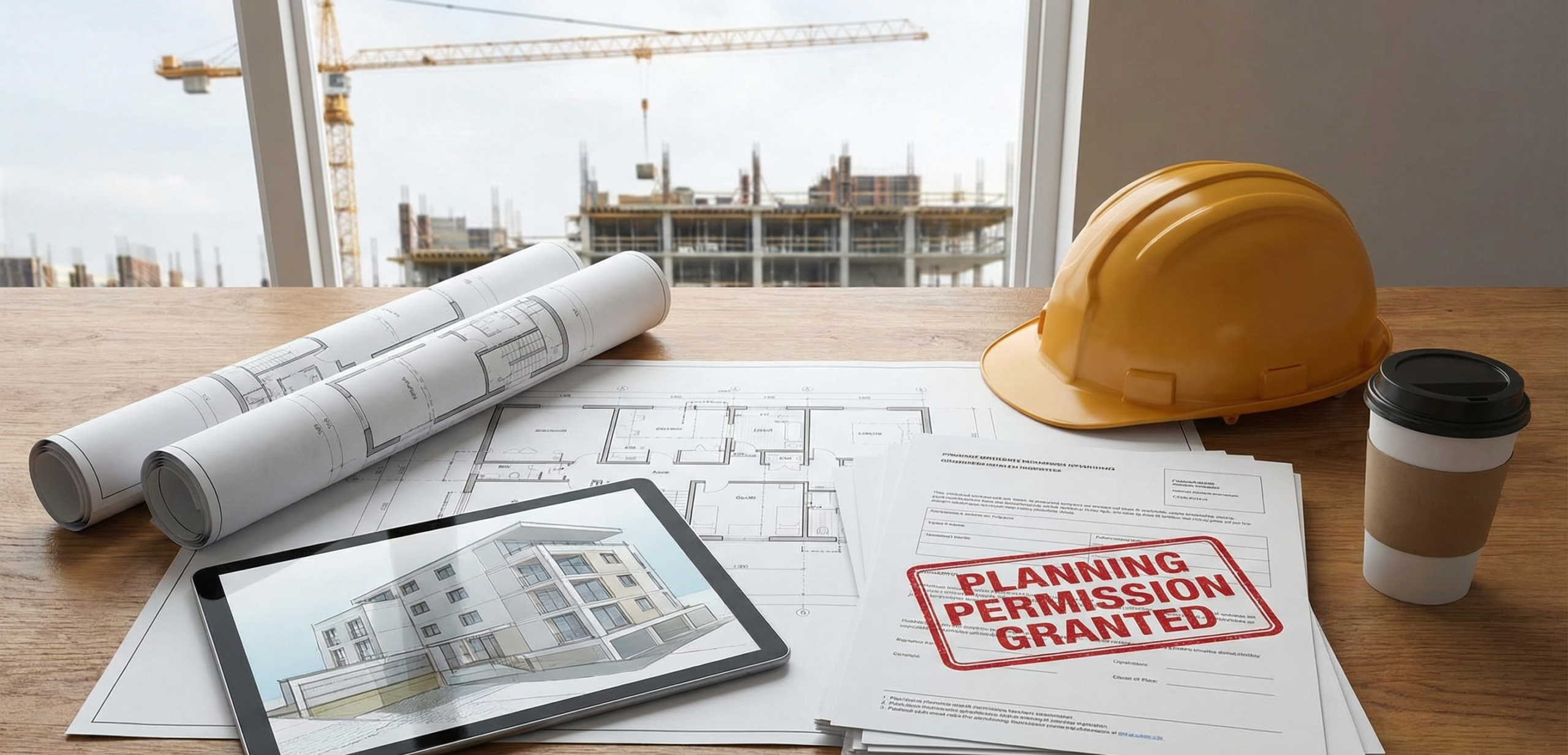
Most people assume planning permission exists to control homeowners or slow things down. In reality, the planning system is there to manage change that affects the wider environment. The moment a development becomes visible, changes how a building is used, or alters how people experience a place, it stops being a purely private matter. A new extension can affect daylight. A loft conversion can affect overlooking. A change of use can increase noise, parking pressure or footfall. Planning permission is the mechanism that allows those impacts to be assessed before harm occurs. It is not about whether development should happen at all. It is about whether it happens in the right way, in the right place, and at the right scale.
A common frustration is the idea that “it’s my house, so I should be able to do what I want with it.” Planning law does not work on that basis. You own the building, but you do not own the consequences of development beyond your boundary. Planning permission exists because individual decisions, when repeated across a street or neighbourhood, shape the character of entire areas. Without a system to manage that, incremental changes would quickly erode amenity, consistency and liveability.
This is why planning decisions are made on land use and impact, not personal circumstances. Wanting more space, increasing value, or future-proofing a home are understandable reasons to build, but they are not planning reasons. The planning system is concerned with how the proposal affects others.
Planning permission is needed when a proposal results in what the law calls a “material change”. That does not mean dramatic or obvious change. It means change that matters in planning terms. That might be because the building becomes larger, closer, taller or more dominant. It might be because a quiet dwelling becomes a busy use. It might be because something that was once incidental starts to feel intensive. There is no single measurement that defines this. Context is everything. This is why two similar extensions can be treated very differently. What is harmless on a wide plot can be unacceptable on a tight terrace. Planning permission exists precisely to allow that judgement to be made.
Permitted Development rights often confuse people. They are not loopholes. They are pre-agreed assumptions that certain types of development are usually acceptable if they stay within strict limits. Those limits are deliberately conservative. Once you step outside them, the council needs the ability to assess whether the impact remains acceptable. That is when planning permission becomes necessary. This is also why councils can remove Permitted Development rights through conditions or Article 4 Directions. In some locations, even small changes can have disproportionate impact, and the planning system adjusts accordingly.
From a professional perspective, planning permission is best understood as a risk management tool. Local authorities are not just looking at one proposal in isolation. They are considering what happens if that decision is repeated. They are weighing short-term benefit against long-term harm. They are judging how change accumulates. This is why planning is rarely black and white. A proposal can be policy-compliant and still be refused if the impact feels wrong. Equally, a proposal can stretch guidance and still be approved if the harm is limited and well-designed. Understanding this is the difference between treating planning as a formality and treating it as a strategic process.
Internal alterations rarely require planning permission because they do not affect the outside world. The planning system is not interested in how rooms are arranged unless that arrangement changes how the building functions externally. As soon as works alter the external appearance, intensify use, or change how the site relates to its surroundings, planning considerations come into play. The dividing line is not complexity or cost. It is external consequence.
One of the biggest sources of frustration is when relatively modest proposals still require planning permission. This often feels excessive, but it is usually about context rather than scale. A small extension can block light. A modest dormer can disrupt a uniform roofline. A single metre can tip a relationship from acceptable to harmful. Planning permission exists to catch those tipping points before they cause irreversible harm. This is why the system relies on judgement rather than fixed rules.
You need planning permission because development is about impact, not entitlement. The system exists to balance individual ambition with shared space, and it operates on judgement, context and risk rather than rigid rules. When proposals respect that reality, planning becomes far more predictable and far less adversarial. If you are unsure whether your project needs planning permission, or you want an honest view on how risky a proposal really is, get in touch with us to discuss your proposal. A short conversation at the right point can prevent months of delay, redesign or refusal later on.
